
Installation of air conditioning systems
Installation of an air conditioning system requires special technical knowledge and skills. The durability and operation of the system as a whole depends on the quality of installation work. The company “Termal” offers experienced highly qualified specialists who will help to implement an effective air conditioning system and provide a comfortable microclimate in your home.
An air conditioning system is needed to maintain a comfortable room temperature. Its implementation consists of the installation of indoor and outdoor units, as well as their components. Installation of the system is a very painstaking process and requires certain knowledge and experience. That is why it is so important to entrust the work to qualified specialists. The complexity of the installation depends on the type of the system as a whole and the indoor units.
Realized projects
-
Warehouses, Office centers
HVAC system of the office and warehouse complex of Suzirya LLC

-
Gas stations
HVAC system of the KLO filling stations network

-
Warehouses, Office centers
HVAC system of the office and warehouse complex of LLC “STS-Co”

-
Warehouses, Shopping centers and stores
HVAC system for Auto Baza warehouse store of automotive parts and accessories

-
Factories and plants
HVAC system at the Unilever factory

-
Factories and plants
Heating and ventilation system of the Henkel plant

-
Factories and plants
Heating and ventilation system of the SES VanderHave plant

-
Factories and plants
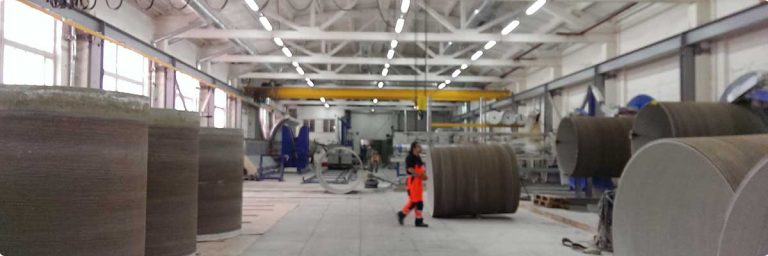
HVAC system of the Ukar-Pipe plant
-
Factories and plants
Ventilation and heating system of the Baumit plant

-
Restaurants and cafes
HVAC system of the Tbilisuri restaurant


Our clients





















Installation of a wall-mounted split system
The easiest way is to install wall-mounted split systems. Wall-mounted air conditioners are used most often in domestic premises: living rooms, offices, shops, etc. The power of such air conditioners rarely exceeds 10 kW.
Installing the outdoor unit
When installing a split system, one indoor unit and one outdoor unit are installed. The outdoor unit is attached to the outer wall of the building with brackets, or on the roof on a mounting frame. It can also be mounted on the ground on a special stand and preferably protected by an anti-vandal grille. To ensure vibration compensation between the outdoor unit and the wall, vibration supports are used. If the unit is installed at a considerable height, you will need the services of high-rise workers.
Installing the indoor unit
The next step is to prepare the holes for the freon lines and mount the indoor unit. If possible, it is installed near a window to cut off excess heat in summer and heat loss in winter. But first of all, the places of permanent stay of people are taken into account. The direct air flow from the wall-mounted air conditioner should not fall on a person.
Electrical cables and insulated copper pipelines are laid between the indoor and outdoor units to carry the refrigerant. The manufacturer’s distance and height standards between them are taken into account. PVC pipes are laid from the air conditioners to drain the condensate. When laying the drainage route, a slope of 1-2 mm must be observed to ensure the gravity of water. If this is not possible, install a drainage pump.
Condensate from the air conditioner is discharged either to the facade of the building or to the existing sewer system. In the second option, the pipes are connected through a check valve or siphon, which prevents the penetration of unpleasant odors. Finally, the freon lines are checked for leaks with a vacuum pump and charged with refrigerant.
Dismantling the system
When dismantling the system, first remove the outdoor unit, then the indoor unit. Copper piping is not recyclable and must be discarded.
Problems that may arise as a result of poor-quality installation of wall-mounted air conditioners:
- Reduced performance due to leaky freon lines. The air conditioner will simply not produce the required parameters over time.
- Condensation leakage due to improper installation of the drainage pipe or failure to observe the slope.
Installation of floor-to-ceiling air conditioners
In general, the installation of floor-to-ceiling air conditioners does not differ from wall-mounted ones. The only difference is the installation location. They are installed openly either on the ceiling or on the wall (for example, like a conventional battery under a window).
Installation of ducted air conditioners
The installation of a ducted air conditioner is one of the most difficult compared to other types. Such air conditioners are designed for hidden installation behind the ceiling, although open installation is also possible. They can work for several rooms at once, but it is worth remembering that the temperature is also regulated simultaneously in all rooms. Unlike wall-mounted air conditioners, ducted air conditioners are much quieter and have a wider range of use. Their power varies from 3-5 kW to 25 kW.
The standard installation of the air conditioner includes the installation of air ducts, adapters, and, after finishing work, grilles. The indoor unit is attached to the ceiling using studs, perforated tape or special brackets. If the air conditioner is installed in a technical room, directly above the working room, it is placed on the floor on vibration damping pads.
After the installation work, the air flow through the grilles is also adjusted and the air flow rate is regulated.
Installation of cassette air conditioners
Like ducted air conditioners, cassette air conditioners are characterized by high performance, but compared to the latter, they are easier to install.
Cassette air conditioners are widely used in commercial (shopping centers, conference halls, etc.) and industrial buildings. Thanks to the 4-airflow system, they are able to cover a larger area and can be installed in rooms with ceilings from 4 m high. Such air conditioners are suitable for flush-mounted installation (only the square decorative panel remains visible) and for open installation.
Installation of multi-zone VRF systems
Multi-zone VRF air conditioning systems are designed for large rooms, can not only cool the air, but also work as a full-fledged heating system without additional heat sources. Such systems consist of one outdoor unit or a whole cascade and several indoor units. They are mainly used in large administrative and industrial buildings.
Such a system requires a lot of costs, effort and knowledge during installation, and its implementation is impossible without a project.
Installation of indoor and outdoor units of the VRF system
The installation of indoor and outdoor units and components differs from a conventional split system only in the scope of work, as well as the additional installation of refnets that distribute the amount of freon between indoor units. The latter can be used as air conditioners of all types simultaneously in one system.
Installation of roof air conditioners (rooftop units)
A rooftop air conditioner or rooftop unit combines both indoor and outdoor units. It is usually installed on a prepared area on the roof of a building and is used in large buildings such as shopping centers. This system resembles a ventilation system. A network of air ducts is also installed in the room, power is supplied, grilles are mounted, and at the end, the system is commissioned and started up.
Installation of a central air conditioner
A central air conditioner is the same ventilation system, but with an additional cooling function and a similar installation method. In addition to the air handling unit with accessories, the system includes an outdoor unit. It is connected to the unit’s cooler through insulated freon lines and electrical cables.
Cost of installation of air conditioning systems
The cost of installing an air conditioning system depends on the number and complexity of the work, the type of system being installed, the power of the equipment, the volume and material of the pipelines. The price is also influenced by the time of day the team is installing, whether there are any high-altitude works, and many other details.
Answers to frequently asked questions